How to Start Journaling: Tips, Ideas, and Writing Prompts
In my previous blog post, 4 Benefits of Journaling: How to Build a Daily Writing Practice, I explored some of the reasons I value journaling, along with its physical and mental health benefits. In this post, I'll share ideas, resources, and prompts to help you begin your own journaling practice.
Beginning with a fresh page in a blank notebook can offer a sense of excitement, promise, and even exhilaration. Each time you work in a journal, you're not only starting a new chapter in both literal and figurative senses, but, in a way, you're finding renewed agency as the author of your own story.
First, and perhaps most importantly, don't let the term journaling stop you in your white-knuckled tracks if you're having visions of a vicious vampire grammar teacher who forced you to diagram sentences and let multiple red pens bleed profusely all over your essays. Journaling, in the sense used here, is about getting ideas down and getting what's inside out—not about perfection. Let those diamonds in the rough be; they can always be polished later, if they even need that.
1. Find a Journaling Method That Works for You
If you're not ready to write in the traditional sense, there are countless other options available for tracking your thoughts. I have students who prefer to make audio recordings, dictating their entries directly into their smartphones in a stream-of-consciousness flow. You could also begin collecting magazine or newspaper clippings in your journal, crafting found poetry, or compiling collections of quotes that resonate with your current frame of mind.
If you're visually inclined, experiment with the wonderful world of collage, or explore décollage, photo montage, mixed media, and the many other approaches that allow you to work with images, text, and found materials. You don't necessarily need to write a single paragraph to begin documenting your thoughts and experiences.
A journal can take many forms. You might keep a traditional written record, create a visual diary, record voice memos, or combine several approaches. The important thing is to find a method that allows you to return to your thoughts and experiences in a way that feels natural to you.

2. Choose a Journal Without Overthinking It
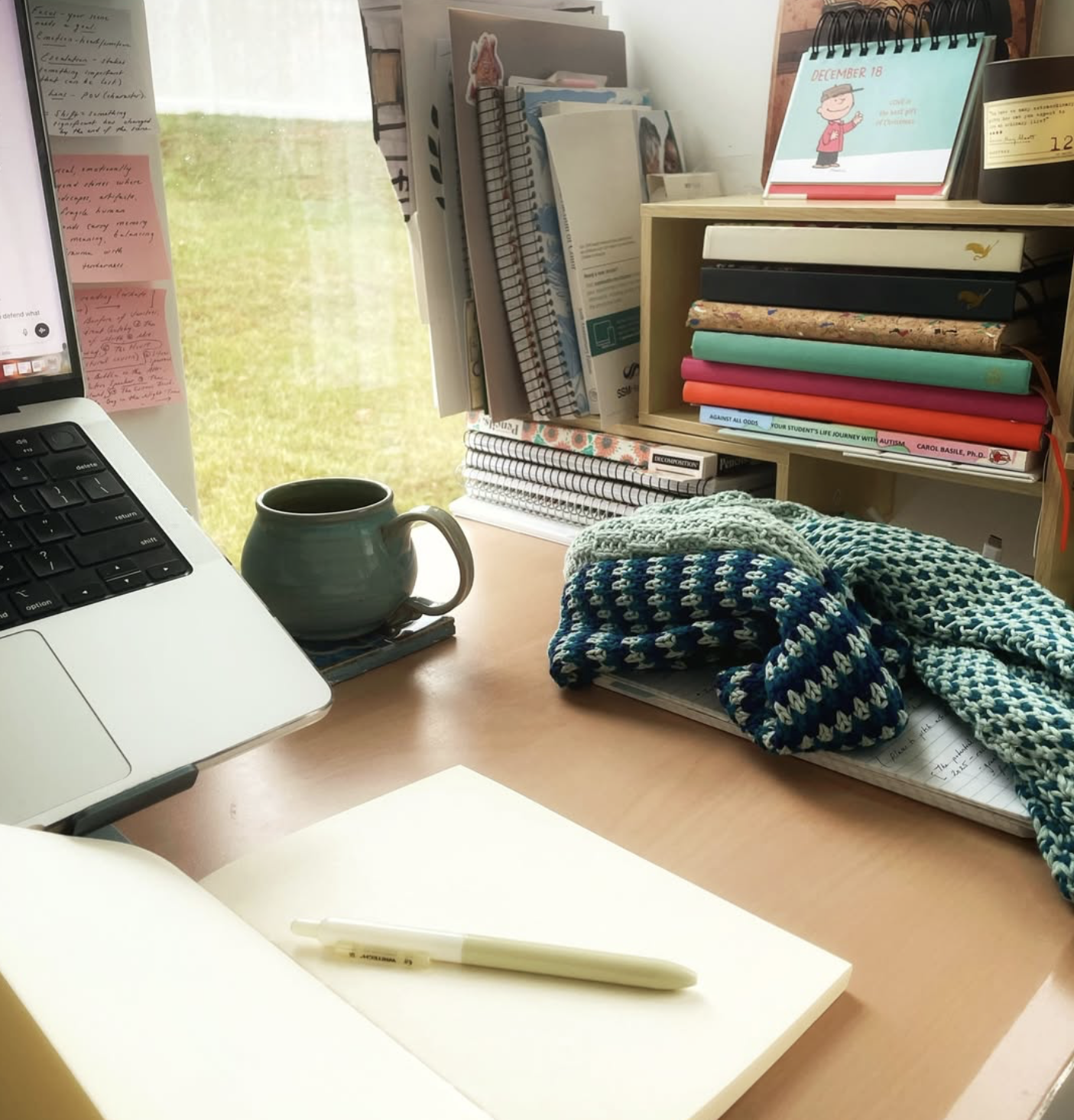
Do not let selecting a journal, notebook, or sketchbook become a barrier to getting started. Chances are, you already have something suitable squirreled away in your living space.
My close friend once made herself a DIY notebook from multiple pieces of computer paper folded in half and stapled down the middle. A professor of mine taught us to take old, used books, gesso the pages, and turn them into recycled sketchbooks. I even worked in a Five-Star notebook I purchased 20+ years ago. It looks brand new—the paper hasn't even yellowed. The only clue to its age is the calendar insert in all its Y2K glory: 1999, 2000, 2001, and 2002!
A note on journals themselves: I'm a highly visual and haptic person. I think and process things best through writing that involves using physical pen and paper. However, if you prefer working digitally, you can use a digital journaling platform such as Penzu or simply create a document in a notes app.
If you're in the market to purchase a new journal, please don't let the admixture of "I must pick out the perfect one or the moon will corkscrew off its orbit," coupled with a fear of getting started, metamorphose into procrastination.
If you're looking to keep things simple and cost-effective, select a basic spiral-bound notebook with 8.5-by-11-inch pages and go from there. However, if you're trying to decide among the bottomless array of journals, logbooks, goal trackers, planners, and chock-full-'o-affirmations volumes, know this: it's often best to strike a balance.
You'll likely find consistent success with a journal that is interesting enough—perhaps its appealing colors and design make the act of recording feel celebratory. This will encourage you to return to it on a regular basis. Yet the journal should not be an object so precious that you freeze when you open it, fearful of sullying its pages with your seedling musings.
The best journal is not necessarily the most expensive, beautiful, or elaborate one. It's the one you'll actually use.

3. Experiment With Different Journal Layouts
If you find yourself stuck trying to decide among journal page layouts—lined, unlined (blank pages), or bullet dots—I'll share my two cents.
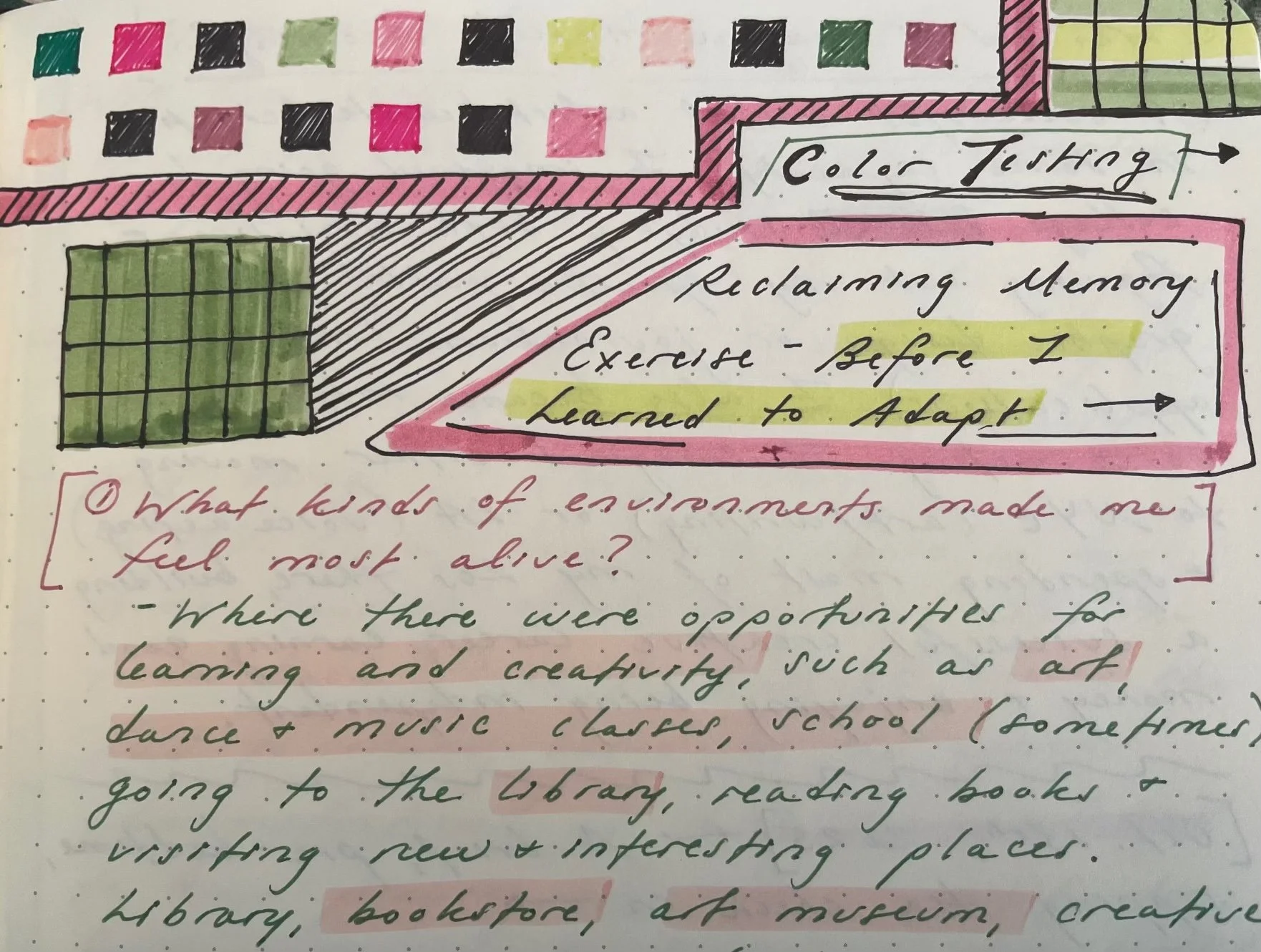
Personally, I prefer using dotted journals, but please note: this is not Pinterest-perfect bullet journaling where I've used everything from watercolors to gold leaf to make a coordinated design on each page for Winter Solstice.
I like dotted journals because they're open enough to feel spacious and allow me to spontaneously sketch or throw in a bit of calligraphic text. Simultaneously, the matrix of dots also provides me with some structure, preventing words from running willy-nilly all over the place. Think of the small toe holds used by a mountain climber.
That being said, as a person, I tend toward a combination of balance and hybridity. What works for me will not necessarily be the best choice for you.
Take a moment to assess yourself—your personality, your working style, and what helps you feel calm and at ease. If you're a person who feels most comfortable with clear order and structure, you may thrive with a traditional, lined journal or college-ruled notebook. If you're someone who finds joy in improvisation and the unexpected, you may see either a dotted or lined journal as far too constricting and crave the freedom and possibility of a crisp, blank page.
Experiment with a range of options and take mental notes. What do you keep coming back to? What feels natural?
4. Establish a Journaling Routine
Once you've chosen your journaling tools, allow yourself time to determine a journaling schedule (of sorts).
You can formally schedule daily or weekly time to write if that works best for you, or you can have a "loose" routine where you tend to journal during your lunch hour, in the evening before bed, or first thing in the morning.
I opt for a more flexible practice such as this; some days, I'm able to write during my lunch break, while other days it's easier to find time to tuck into my journal just before bedtime.
Of course, the key is to establish a journaling routine that is consistent and works within your schedule, allowing the practice to become a ritual that you await with pleasure. Daily journaling can be a wonderful goal, but consistency doesn't have to mean following a rigid schedule without exception. If a few times a week is what works for you, begin there.
You may find that certain times of day lend themselves to particular kinds of reflection. Perhaps your morning entries help you gather your thoughts before the day begins, while evening entries offer an opportunity to look back at what you've experienced. Give yourself room to experiment.
The goal is to build a practice you can sustain, rather than another obligation to add to an already full schedule.
5. Use Journaling Prompts When You Feel Stuck
You've selected your journal. You've found a time of day that works for you. And now comes the hardest—or most frightening—part for some: what to journal about?
If you feel anxious about getting started, remember that journaling is not an exercise in producing perfect prose. You don't need to write something profound, uncover a life-changing insight, or even know what you're trying to say before you begin.
If you feel ready to pour stream-of-consciousness thoughts onto the page without restriction, by all means, do so. However, if you feel blocked or stuck, try beginning with the series of prompts outlined below.
I recommend that you begin with one or two that feel doable in this moment. Remember that there aren't right or wrong answers. Rather, the goal is to get as close as possible to answers that are authentic to you, your experience, and your creative practice at this time—even if that practice is only planted or newly hatched.
Down the road, this journal may prove to be an important time capsule that fuels more of your creative work.

Journaling Prompts to Get You Started
1. Check in with your physical body.
Are there any areas that feel tense, constricted, or fatigued? Is your breathing spacious or shallow and anxious? Take a moment to pause and rest, and, if possible, turn off any noise or notifications that may distract you. Select a part of your body that feels the most constricted and begin composing a message of relief.
What might that part of your body need from you right now? What would it say if you gave it a voice?
2. Explore a current challenge.
What has been the most difficult aspect of your life lately? Has this been an ongoing challenge, or is it the result of a recent or sudden change? What steps have you been able to take to help yourself cope, and what steps might you take next?
You don't need to arrive at a solution by the end of the entry. Sometimes, putting a difficult experience into words is a useful place to begin.
3. Allow yourself to sit with your emotions.
Do your current emotions feel intense, or have you walled yourself off from feeling? Perhaps your experience moves back and forth, depending on the situation.
For example, when I completed this exercise, I found myself donning ice-cold, bulletproof armor when writing about work, then vulnerably cracking open when writing about my children.
What is an emotion you can safely sit with and gently release right now? What might you learn by giving yourself permission to acknowledge it without immediately trying to change it?
4. Consider your creative practice.
How do you feel about your creative work? Is it nourishing at the moment? Or does it feel pressurized, perhaps because all of your creative energies are being diverted to your day job or managing your work, home, and life situation like an airplane flying on one engine?
Is your creative practice almost nonexistent, and do you feel like someone who is parched and yearning for a lush oasis?
What would you like to work on now if you were facing no limitations? What small step might help you reconnect with that work?
5. Revisit an experience you'd like to understand differently.
Think of an experience that has stayed with you, whether because it was difficult, unexpectedly meaningful, or simply hard to make sense of at the time.
Imagine an intricately woven tapestry that illustrates a scene. You're pulling out a handful of specific threads that you want to rework—to weave again and create a new story.
What personal narrative can you extract from this experience and reconsider? Is there a way to understand it that feels more positive, beautiful, or meaningful? You don't need to deny what was difficult or pretend that everything worked out as you hoped. Instead, consider what else might be true about the experience, and what you can carry forward from it.
6. Identify a creative accomplishment.
Pinpoint one—or several—creative accomplishments you've achieved. These can be small or large, and don't diminish them if you think they're small. They might relate to your art, writing, or other creative practice, or to something in your daily life that required persistence, imagination, or resourcefulness.
What about this accomplishment makes you especially proud? Give yourself plenty of freedom and space to elaborate.
7. Imagine a wish or goal for the future.
What's a wish or goal you'd like to set for yourself? In moments of uncertainty or restriction, it can seem logical to remain in the realm of the probable and practical. Without question, there are benefits to being pragmatic, but there's also value in being hopeful.
What is something you deeply dream of? Allow yourself to explore this as much as is comfortable, and stretch your imagination beyond its standard limits.
You don't need to know how you'll get there. For now, give yourself the space to imagine what you want.
8. Create a list of your own prompts.
Feel free to make a list of journaling prompts that you can return to at your leisure. You might find yourself drawn to questions about memory, relationships, creative work, personal growth, or the world around you.
Keep the list somewhere accessible in your journal. When you find yourself staring at a blank page, you'll have a place to begin.

Start Small and See Where Journaling Leads You
I invite you to give journaling a try for at least a week (a month is even better!) and see where it leads you.
What insights did you experience? Did you find increased clarity? Did certain questions or subjects keep appearing in your entries? Perhaps you discovered something about your working style, your emotions, or the creative projects you'd like to pursue.
You may also find that some days, you have very little to say. That's fine, too. A journaling practice doesn't need to be remarkable every time you sit down to write. The value often comes from returning to the page, paying attention, and allowing your thoughts to develop over time.
You never know what you might discover—or what those seemingly small entries may eventually become.