How to Overcome Creative Setbacks and Keep Making Art.
At some point, most of us will encounter a significant barrier or setback in our creative lives. Sometimes, these challenges are relatively small, and we find our way around them without too much difficulty. Other times, they are so substantial that they threaten to derail us entirely. For me, this happened on a grand scale in 2014.
Within the space of a few months, I was offered an opportunity to participate in a filmmaker’s documentary, a major sports stadium expressed interest in purchasing my paintings, and I was preparing for a solo art exhibition. These were exciting developments, each representing a different possibility for my work and my future as an artist. Yet, through a series of unfortunate events, all three opportunities unraveled and disappeared like smoke right before my eyes.
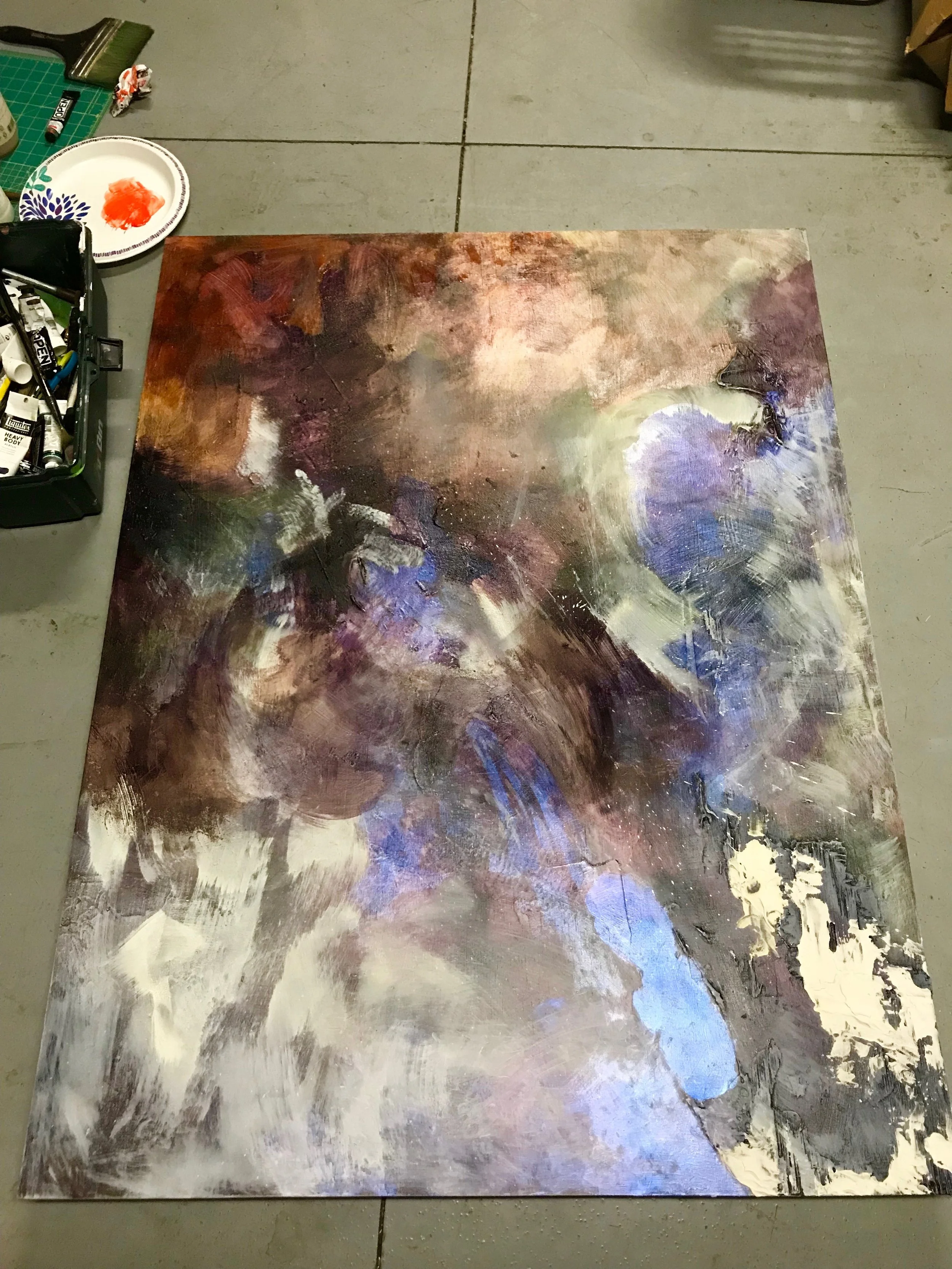
One of my roughed-out underpaintings, very much in progress. Image © Erin Schalk.
Perhaps you have experienced something similar. Maybe a potential buyer backed out of a commission you had been counting on, or you have found yourself in a creative dry spell, producing work that feels stagnant or too much like what you have already done. Perhaps an artist, teacher, or someone whose opinion you value offered a critique that left you questioning your abilities. Or maybe you have reached a point where you are no longer certain what direction to take, or whether you are meant to pursue your creative work at all.
Whatever form your setback has taken, know that you are not alone.
Creative disappointments affect us in different ways, and there is no single solution that will work for everyone. Depending on the circumstances, moving forward may involve experiencing some of the familiar stages of grief: shock, pain, anger, reconstruction, and acceptance. When the opportunities I had been counting on disappeared in 2014, I genuinely felt that my time as an artist was over. I grieved what I had lost. The experience left me with a diminished sense of confidence that took far longer to repair than I would have expected. Fault lines and unhealed fractures in my sense of self-confidence persisted for years.
Looking back, there are a few things I wish I had understood more clearly at the time. Perhaps they will be helpful to you, too.
Reconsider Your Own Perspective.
One thing I have learned is that you need to remember your own relationship to your work, particularly when other people's responses threaten to overshadow it. You are the foremost authority on your work. Always.
This does not mean that other people's opinions are without value, or that we should dismiss criticism simply because it is uncomfortable to hear. We can learn from the perspectives of buyers, gallery owners, fellow artists, editors, and readers. Sometimes, their feedback helps us recognize something we had not considered or reveals an area in which our work could grow. But their opinions do not have the final say in determining what our work means, what it is capable of becoming, or whether we should continue making it.
When a potential buyer backs out of a commission, a gallery decides not to exhibit your work, a colleague offers a harsh critique, or a publication rejects your poem, it is natural to feel disappointed. Depending on how much the opportunity meant to you, that disappointment may be considerable. Still, it is worth asking yourself a few questions before allowing someone else's response to become the measure of your creative worth.
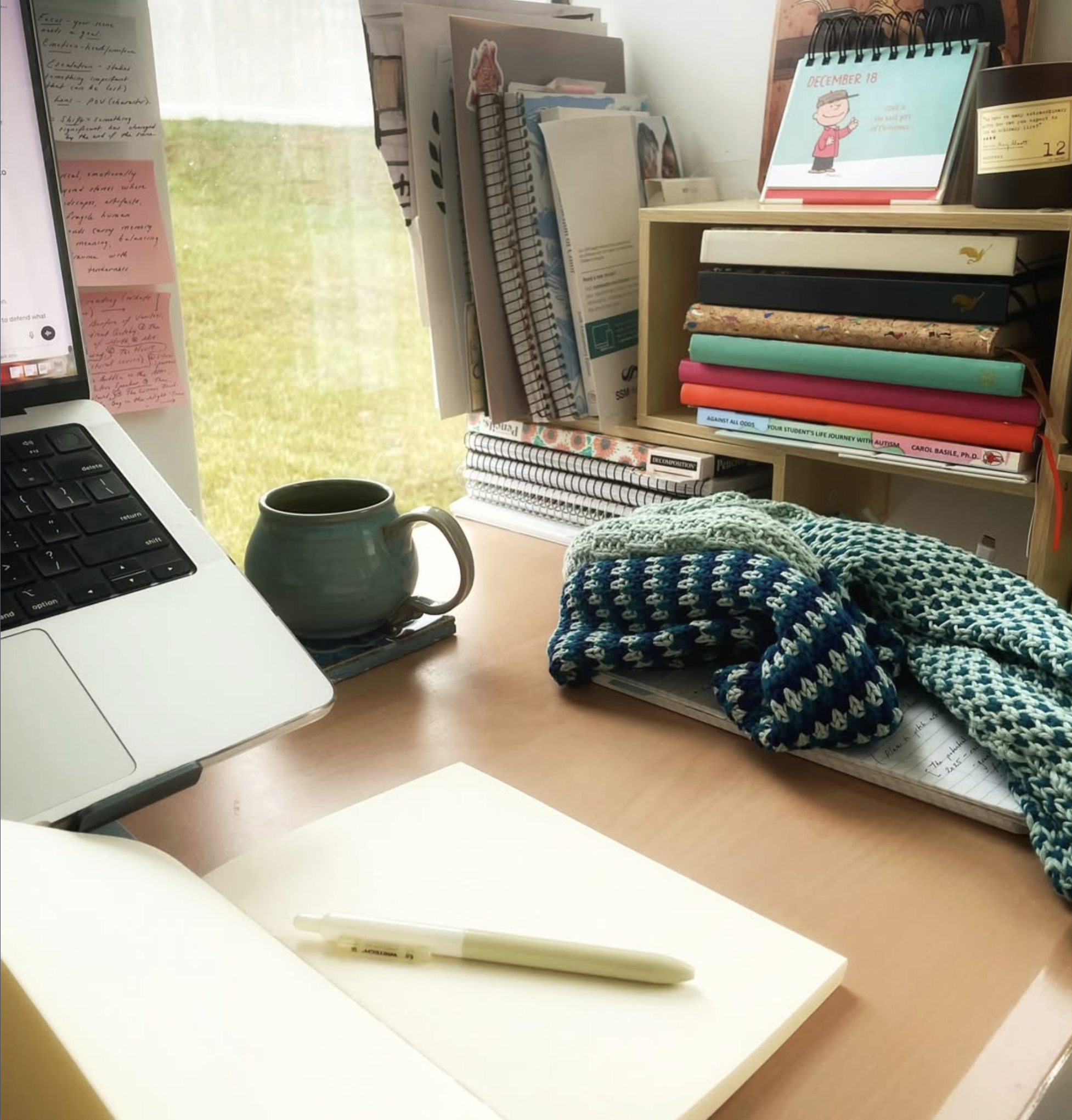
Inside my studio, working through questions and thoughts in my notebook. Image © Erin Schalk.
Does the work reflect who you are and what you want to communicate? Is something missing, or does something feel misaligned? Are there aspects you would like to develop further? Most importantly, are you proud of what you have made?
These questions return some of the responsibility—and the agency—to you. Instead of allowing a rejection or a critical response to become a verdict on your abilities, you can consider what it means to you and decide whether there is something useful to take from it. You can acknowledge where you want to improve while also recognizing what is already working.
If you tend toward self-criticism, this may take some practice. When something goes wrong, it can be tempting to turn your attention entirely toward what you could have done better, what you should have known, or what you imagine other people must think of you. If that sounds familiar, try naming one aspect of your work that you would like to improve and one thing you genuinely appreciate about it. Both can be true at the same time.
There is room for growth without requiring you to dismiss everything you have accomplished. Other people will always have their opinions, and some of those opinions may be valuable. But have you given your own perspective the same consideration?
Find a Way to Remain Connected to Your Creative Work.
When we encounter significant obstacles, it can be difficult to imagine how we might continue. Sometimes the challenge is practical: we lack the time, money, resources, or physical ability to work as we once did. Other times, the obstacle is less visible but no less formidable. Disappointment, grief, and self-doubt can make the act of creating feel almost impossible.
Frida Kahlo is one example of an artist who found unconventional ways to remain connected to her work despite extraordinary physical challenges. Following a devastating bus accident, she lived with chronic pain and underwent numerous medical procedures and hospitalizations. Her circumstances often limited what she could do, but she adapted her working methods. She painted while lying in bed, using a specially designed easel, and created work while wearing a plaster corset.
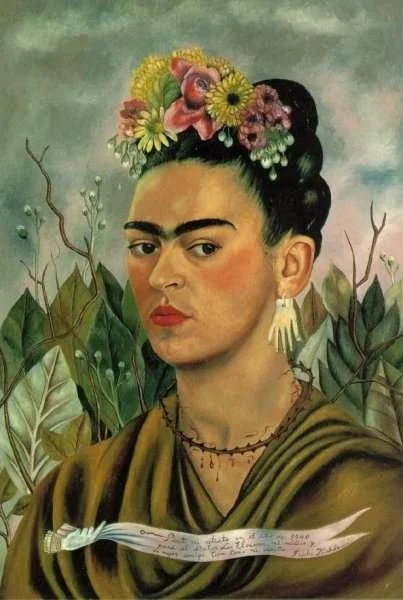
Frida Kahlo, Self-Portrait II, 1940. Public domain.
Kahlo's experience reminds us that creative practice does not always have to look the way we expect it to. The conditions under which we work may change, sometimes dramatically, and we may need to find different ways of engaging with our art. Continuing to create does not mean pretending that our circumstances are easy or that determination alone can overcome every barrier. Our health and well-being matter, and there are times when rest, recovery, or a change in expectations must come first. But when we are able, finding a way to remain connected to the work can be meaningful in itself.
I wish I could say that I understood this when my own creative life seemed to fall apart in 2014. For a long time, I was frozen by doubt. Picking up a paintbrush felt like one of the most dangerous, reckless actions I could take, as though attempting to make something new would only expose me to another disappointment. I knew I wanted to create, but wanting to do something and feeling capable of doing it were two very different things.
Eventually, I began trying again. I kept making things, even when I was uncertain about where they would lead. I cannot point to one particular moment when everything changed, nor can I say that the doubts disappeared altogether. What I can say is that, through my continued commitment to the work, answers and opportunities eventually began to emerge. The doubts that had once seemed so overwhelming gradually ebbed away.
If you are facing a creative setback right now, I encourage you to consider what reconnecting with your work might look like for you. You may not be ready to undertake a major project, pursue another exhibition, or submit your writing for publication. Perhaps you can begin with something smaller: a few lines in a notebook, a quick sketch, a little time spent reading, or simply giving yourself permission to think about what you would like to make next.
You do not have to resolve every uncertainty before you begin again. Nor do you have to prove anything to anyone else. Your creative work is worth tending to because it matters to you, and because the things we make have the potential to enrich not only our own lives but the lives of others.
Setbacks can change us, and sometimes they require us to reconsider our direction. They may even lead us to recognize that a particular opportunity or approach is no longer right for us. But a painful experience does not have to determine the entire course of our creative lives.
Whatever you are working through, I hope you will give yourself the time and space to recover, reflect, and find your way forward. You may not know what that path will look like yet. You do not need to have every answer today.
Keep fighting the good fight.
I promise to do the same. :)